Cathedral Choral Society Announces Key Leadership Updates

Emma Moores Named Executive Director and Steven Fox Extends Term as Music Director

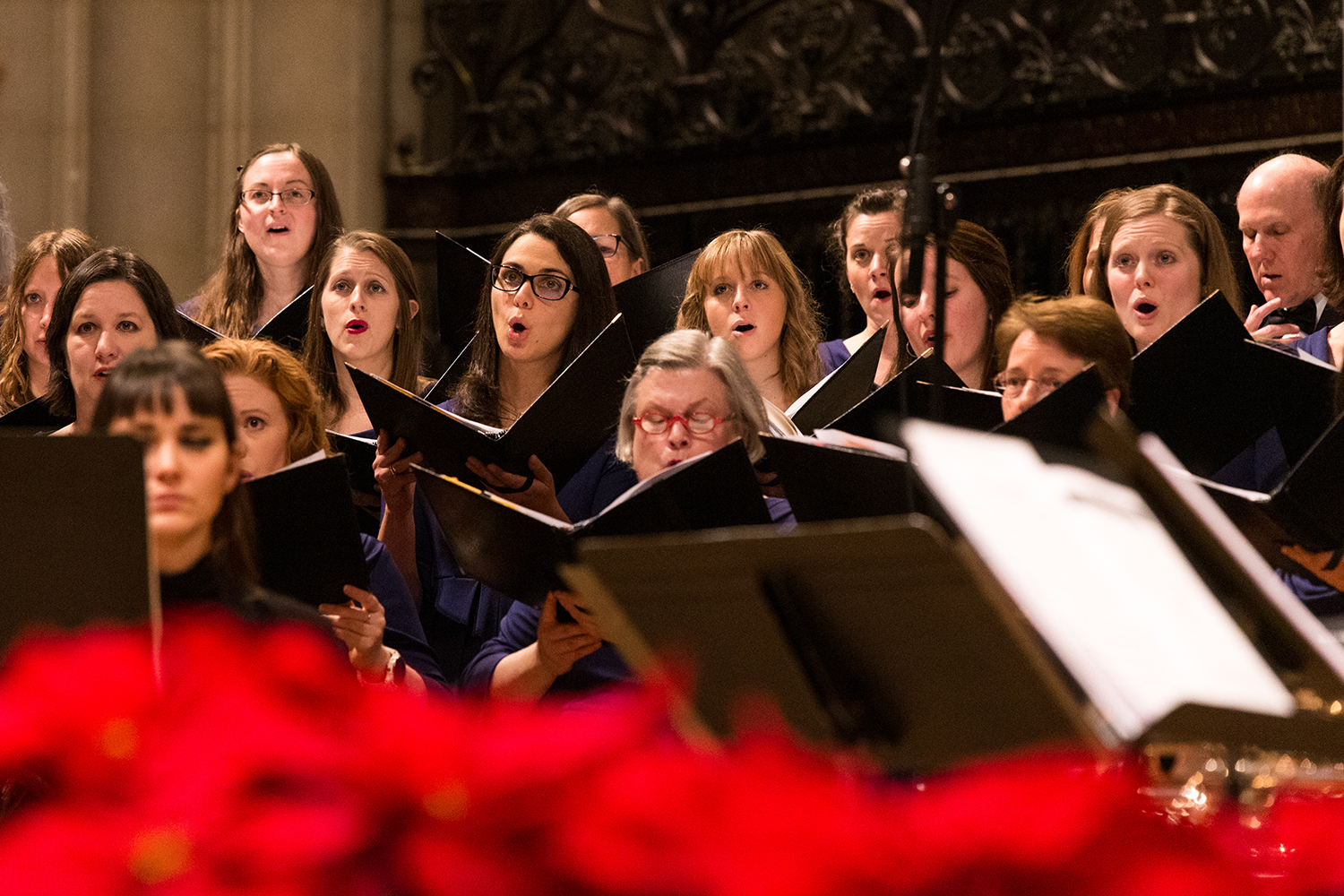
Washington, D.C.– The Cathedral Choral Society (CCS) is pleased to announce the extension of Music Director Steven Fox’s contract through the 2028-29 season and the appointment of Emma Moores as executive director on September 1, 2025.  Additional leadership updates include Gabriela Calderon who was promoted to director of communication and philanthropy. Calderon was previously patron and donor manager for the chorus. Rounding out the leadership team is Kathleen Welling, deputy executive director of artistic administration, and Dr. Joy Schreier, assistant conductor and accompanist.

Fox was named CCS music director in 2017, and with this contract extension, he will have completed 10 seasons with the chorus in 2028-2029.  “I am honored to be continuing as Cathedral Choral Society’s music director through the spring of 2029. CCS has achieved some significant milestones these past few years. Something special is happening in this chorus right now, and I am excited to continue to build our sound and our repertoire, as well as our audience and outreach, during these next few years.” 

Fox added, “As part of the search committee, I was looking forward to finding a great leadership partner. I am so glad that CCS has found this in Emma Moores. She brings a wealth of leadership experience in development, marketing, and operations from her many years at the Washington Chorus. We are very lucky that she will now be bringing her gifts to CCS. I am personally very excited to work with her to lead CCS to greater heights in the coming years.” 

Moores said, “I am thrilled to step into this role to support the immensely talented CCS staff, actively engaged board of trustees and deeply dedicated volunteer singers. Together, we serve a vital function for our Washington, DC community by bringing awe-inspiring artistry to one of the most extraordinary venues in our nation—and beyond. I look forward to building upon CCS’s storied legacy of excellence and co-leading this team with Music Director Steven Fox, as we work to deepen and widen the impact of our music making. It is an honor to be welcomed to this incredible organization, and I look forward to sharing my enthusiasm to advance our mission.” 

Moores is an accomplished, effective and highly regarded leader in the performing arts, and she brings a depth of experience to CCS.  Her skill in fundraising and finance was honed during her 12-year tenure at The Washington Chorus where she served most recently as Deputy Director. Earlier in her career, Moores held positions in operations, marketing and development with The Orchestra of the Americas Group and the Youth Orchestras of Prince William. Also, she regularly performs with the Manassas Symphony Orchestra as a trombonist.  

“After a deliberate and thoughtful search for our next administrative leader, I am delighted to welcome Emma Moores to the CCS family,” said Jeremy Gosbee, who led the search committee and was recently elected president of the CCS board of trustees. “Emma’s proven skills and talents in fundraising and arts leadership allow her to hit all the right notes with us, and her broad mix of experiences prepared her to effectively step into the executive director role.”  

Gosbee added, “I am immensely grateful to Catherine Ort-Mabry for serving as our interim executive director while we conducted this search. Her extensive nonprofit leadership experience and communications acumen were invaluable as we worked toward continued growth and success for one of our nation’s leading symphonic choruses.” 

ABOUT THE CATHEDRAL CHORAL SOCIETY

As Washington, DC’s longest standing symphonic chorus, the GRAMMY-nominated Cathedral Choral Society sets the standard for vibrant, engaging concerts in the nation’s capital. Each season, CCS presents mainstage concerts at its home, Washington National Cathedral, inviting concertgoers on exciting musical journeys that reflect the rich diversity of musical traditions in our local community and throughout our nation. The aims of the chorus are to invite more people into the art of choral singing, elevate emerging voices, and steward the art for future generations. 

Since its inaugural performance of Verdi’s Requiem in 1942 at the outset of the Second World War, CCS has performed in times of national celebration and in times of mourning. The chorus has performed with some of the most extraordinary musicians of the last century, including Robert Shaw, Marin Alsop, Leonard Slatkin, Dominick Argento, John Rutter, Dave Brubeck, J’nai Bridges, and more. In collaboration with New York’s Clarion Music and the Orchestra of St. Luke’s, CCS was nominated for a 2021 GRAMMY Award for its recording of Alexander Kastalsky’s Requiem for Fallen Brothers.  

CCS has embarked on numerous other collaborations, often with today’s finest performing ensembles. These have included the Baltimore Symphony Orchestra, the National Symphony Orchestra, the Atlanta Ballet, the Washington Bach Consort, Kansas City Chorale, Washington Ballet, and more. A multi-year collaboration with the Heritage Signature Chorale, called I, Too, Sing America, has resulted in performances and documentary videos – available on CCS’s YouTube channel – and will culminate in a concert of new commissions from African American composers in 2026. CCS is heavily invested in fostering emerging voices by regularly commissioning up-and-coming composers and featuring outstanding young soloists. 

CCS was founded by the Cathedral’s music director Paul Callaway in 1941, just days before the United States entered World War II. Since that time, only two other music directors have led the chorus: J. Reilly Lewis from 1985 to 2016, and, since 2018, Steven Fox. 

MEDIA INQUIRIES

Amanda Sweet
Bucklesweet
amanda@bucklesweet.com
(347) 564-3371

Before The Downbeat: CCS & Chanticleer

Before The Downbeat is a study guide by and for the Cathedral Choral Society in preparation for its concerts. Previously distributed in print form to singers only, we are thrilled to present this content to all our audiences in digital form.

A Time for New Beginnings

 The pivotal year 1947 brings the emergence, after decades of economic depression and world wars, of a postwar rules-based world order based on the Declaration of Principles first set forth by Winston Churchill and Franklin Roosevelt in the Atlantic Charter on August 14, 1941. 

  • In January, President Truman appoints General George C. Marshall to be Secretary of State. 
  • In February, Voice of America begins broadcasting into Eastern Europe and the Soviet Union. 
  • In March, the Truman Doctrine is proclaimed to help stem the spread of communism. 
  • In June, George C. Marshall, in a June 5 speech at Harvard, outlines the European Recovery Plan — ERP, or the Marshall Plan — for American reconstruction and relief aid to European nations. 

On the eve of the congressional vote on the ERP in 1948, Washington National Cathedral and the Federal Council of Churches’s Commission on a Just and Durable Peace host a conference attended by more than 2,000 persons, including President Truman. “The world,” warns Secretary Marshall, “is in the midst of a great crisis inflamed by propaganda, misunderstanding, anger, and fear.” He speaks of the peoples of Europe “still struggling against grim poverty and cold, uncertainty of the future, and acute dread of tomorrow.” 

In The Beginning

 One month before Marshall’s historic speech, Harvard Memorial Chapel was the setting of another landmark event, a symposium described as a “fundamental reexamination of music criticism . . . brought into prominence by [new communication technology] in modern society.” 

In conjunction with the Symposium on Music Criticism held over the first three days in May, Harvard commissioned new music—the fee was $500—for three concerts. On the evening of the second day, Robert Shaw led his Collegiate Chorale and brass players of the Boston Symphony Orchestra in three choral works by Italian composer Gian Francesco Malipiero, newly naturalized German exile Paul Hindemith—and Aaron Copland, the Brooklyn-born son of Russian émigrés. 

Assigned to write a 15-to-20-minute composition “for a cappella chorus on a text drawn from Hebrew literature, either sacred or secular,” Copland now embarked on a “new beginning” by returning to the “familiar oft-told story” of creation recounted through the first thirty-eight verbatim verses of Genesis in the Hebrew Bible (Genesis I through II:7 in the King James Version). 

Copland chose a mezzo-soprano soloist as the narrator, the Vox Dei, or voice of God: “I was striving for a gentle narrative style using the biblical phrase ‘And the next day . . .’ to round off each section.” His biographer Howard Pollack wrote, “All the music derives from the soloist’s opening unaccompanied phrase, even more specifically, from the single gesture ‘In the beginning’.” The soloist describes the work of creation; the chorus comments in a homophonic chant at the end of each Day of Creation. In the Beginning is dedicated to Nadia Boulanger, the French pedagogue with whom Copland studied from 1921 to 1924. 

Seen around the world as the quintessentially American voice, Aaron Copland made several tours to Latin America between 1943 and 1963 on behalf of the U.S. State Department’s cultural diplomacy fight against European fascism. He won a Pulitzer Prize in 1944 and an Academy Award in 1950. The shadow of McCarthyism forced last-minute cancellation of the long-planned performance of his Lincoln Portrait (1942) at President Dwight D. Eisenhower’s 1953 inaugural concert. Copland testified twice in closed session before McCarthy’s House Un-American Activities Committee. Lyndon B. Johnson bestowed upon him the Presidential Medal of Freedom in 1964; Congress awarded him a Congressional Gold Medal in 1986. 

“New Occasions Teach New Duties”

So wrote poet James Russell Lowell in support of the antislavery movement in 1845. The vocal ensemble Chanticleer continues this concert’s theme of new beginnings with music spanning eight centuries from the Middle Ages to today. Each piece gives us a bird’s-eye overview of the evolution of music for male choruses, that is, music written for, or within the vocal range, of the male voice, in genres ranging from the sacred to the secular, from masses to songs of drinking, war, seas chanties, and lovers 

From the enslaved singing on plantations in the New World to the nineteenth century’s search for community amid industrialization male choruses arose in Germany, coal miners sang in Wales, and in this capital city, a few young Germans in the Concordia Church choir organized a German Singing Society: Washington Sängerbund. Founded in 1851, it is our oldest continually operating chorus. 

Even before the emergence of fifteenth-and sixteenth-century Renaissance composers, such as William Byrd, music creates a sense of the eternal, above time and circumstance. The Gloria from the earliest complete setting of the Ordinary of the Mass is believed to have been written around 1634 by French composer Guillaume de Machaut, who was a canon of the Gothic cathedral at Reims—the city of French coronations and the scene of the Germany’s unconditional surrender on May 7, 1945. 

In William Byrd’s setting of the Vigilate from the Cantiones Sacrae of 1589, he “engages in vivid and detailed word-painting,” observes British composer Owain Park. “listen for the ascending motif at ‘an galli cantu’ representing a cock crowing, the slowing harmonic pulse and lulling suspensions that accompany the sleeping faithful at ‘dormientes’, and the sudden coming together of the voice parts at ‘omnibus dico’ (‘I say to all’)” 

A third genre in the twentieth-century repertoire of all-male collegiate choruses is arrangements of folk and ethnic works. Among the earliest unaccompanied vocal works by Texan Toby Twining is Hee-oo-oom-ha, composed in 1987 and said to “sit somewhere between rock, folk, and choral music,” explains music director Tim Keeler. He uses “vocal techniques like vocal fry, yodeling, and rhythmic panting … combin(ing) these striking sounds with polyrhythms, mixed meters, and open harmonies to create a joyful celebration of song.”

Born in Berlin, Maryland in 1851, the self-educated son of a slave and a free mother — he taught himself to read by collecting newspaper fragment from the trash — Charles Albert Tindley moved to Philadelphia after the Civil War, taking night courses in theology while working as a janitor at Calvary Methodist Episcopal Church. He would later become its pastor, increasing membership from 130 to a multiracial congregation of 10,000. As a songwriter and composer of hymns such as “Stand by Me,” Tindley is a prominent figure in the development of gospel music. His “I’ll Overcome Someday” is believed to have inspired “We Shall Overcome,” the anthem of the Civil Rights movement. Poor Pilgrim of Sorrow, one of the 46 hymns for which he composed both text and music, was first published in 1919. –Eileen M. Guenther

The traditional African American spiritual Wade in the Water is drawn from two biblical sources: John 5:4, the healing waters at Bethesda, and Exodus 14:19–31, Moses leading the Israelites to freedom from Egypt. In her seminal study of slave life and the power of spirituals, In Their Own Words, Eileen Guenther writes, “Harriet Tubman is said to have hummed this melody as a signal for escapees to move to the water, where their scent was less likely to be picked up by pursuing dogs.” In this arrangement by an alumnus of the Aeolians group, Stephen Murphy uses vocal jazz techniques and expanded harmonies to lift the text off the paper. 

Ayanna Wood’s Future Ones, a hauntingly beautiful creation commissioned by Chanticleer, sets a text by author, teacher, and environmental activist Joanna Macy, a Grammy-nominated performer, composer, and bandleader from Chicago, who earned her music degree from Yale university. Woods is one of the most promising composers of her generation. Her music explores the spaces between acoustic and electronic, traditional and esoteric, wildly improvisational and mathematically rigorous. 

Chanticleer recently commissioned this new arrangement of “Without a Song,” the most enduring hit song from Vincent Youmans (1898-1946) Broadway’s 1929 Great Day. Stacey V. Gibbs is one of the most in-demand arrangers of our time, having written for the King’s Singers, the United last year States Air Force Sergeants, the St. Olaf Choir, the Stellenbosch Choir of South Africa, the University of Southern California Chamber Singers, Cantus, and many colleges, universities, high schools, and professional ensembles. Chanticleer performed this song at the 2009 Presidential Inauguration Ceremony. 

One of eleven children born in Bavaria, Franz Biebl was a lecturer of music theory and choral singing at the Mozarteum’s schools in Salzburg, Austria when “he was drafted into the Wehrmacht in 1943 and taken captive in Italy by the American army in 1944. He spent two years as an American prisoner of war at Fort Custer in Battle Creek, Michigan,” according to Chanticleer music director emeritus Matt Oltman in his dissertation on Biebl. “While there, he became acquainted with American folksongs, African-American spirituals, and gospel music. As a POW, he was allowed to form a choir for which he composed simple arrangements of these newly discovered American musical genres. 

“It was a good time,” Biebl told an interviewer. “I learned to know the Americans and a little bit of American life and ‘democracy.’ We got enough to eat. Good food, just like the American soldiers had…The Americans helped me to arrange concerts with choir, soloists, and chamber music.” 

Released from Fort Custer in 1946, Biebl reunited with his wife in Salzburg and eventually found work as choirmaster at a church in the Munich suburbs. He composed Ave Maria for a German firemen’s choir to sing at a choral competition with similar choirs. A serendipitous meeting in 1970 between the all-male Cornell Glee Club on tour in Germany and Biebl in Munich resulted in its “new beginning” on American shores: 

During the [recording] session a voice made repeated intelligent comments over the loudspeaker about intonation and phrasing, and according to [Thomas] Sokol ‘what he was saying was absolutely correct.’ When the session ended, the man came out of the booth to introduce himself – Franz Biebl, music director of the network.” 

So wrote Michael Slon in Songs from the Hill: A History of the Cornell University Glee Club. Biebl’s Ave Maria has since become one of the best loved and most sung a cappella works. Biebl’s setting combines the “Angelus,” a Catholic devotional prayer, with the “Ave Maria.” 

Tom Petty’s song Wildflowers is about finding a place where you belong; it’s about finding a place where you feel free. For us in Chanticleer, we feel like we belong in a choir, singing next to our colleagues and our friends. And we feel most free when we’re on stage doing what we love. We’re lucky to have found that space, and we hope everyone who hears this song can find freedom and belonging in their own life. –Tim Keeler

(c) 2025 Margaret Shannon

Executive Director Job Announcement

The Cathedral Choral Society has retained Slesinger Management Services to recruit a person with a successful track record in senior management of performing arts organizations, including strong skills in fundraising and marketing, to serve as executive director.

The primary responsibility of the executive director is to manage the human and financial resources of the organization to achieve CCS’s vision and mission. The executive director is responsible for running the business side of the organization while supporting the artistic vision of the music director and implementing policies set by the board.

As the person overseeing the business side of CCS, the executive director should be:

  • An inspiring leader who brings creative and innovative approaches that keep CCS at the forefront of the choral field nationwide.
  • A skilled communicator and relationship-builder, with a proven ability to foster collaboration among staff, board members, singers, donors, and community and artistic partners.
  • Successful in fundraising, especially from individuals, foundations, and corporations. Fundraising is at least 33% of this job.
  • Experienced in key operational aspects of managing and leading a performing arts organization. Experience with choral or other music organizations is desirable, but not essential.
  • A strong financial manager, able to create an annual budget, monitor revenue and expenses throughout the year, and analyze the financial implications of programming and operational opportunities.
  • Fully committed to accessibility, diversity, equity, and inclusion, and assuring that these values are reflected in all aspects of CCS’s work.
  • Able to work collaboratively with the CCS music director so they serve effectively as co-leaders of the organization.
  • Experienced and comfortable leading an organization where part-time volunteers – the 130+ person chorus – play an integral role.
  • Comfortable in a hands-on role, given the relatively small paid staff.
  • Able to work effectively with the CCS governing board and committees.

In summary, CCS is looking for an executive leader to help this world-class performing arts organization build upon its generations of success by expanding its artistic and educational programming, and gaining further recognition as one of the nation’s most prominent choruses.

To apply and for more information, please or visit https://www.slesingermanagement.com/active-searches or contact Larry Slesinger at larry@slesingermanagement.com.

Before The Downbeat: Joy of Christmas

Before The Downbeat is a study guide by and for the Cathedral Choral Society in preparation for its concerts. Previously distributed in print form to singers only, we are thrilled to present this content to all our audiences in digital form.

They come unbidden—these “mystic chords of memory”—amid the daily round. The annual trips to see the Christmas windows at Woodward & Lothrop, the lighting of the National Christmas Tree, that first trip home from college, a family outing in a softly falling snow to choose the perfect Christmas tree, then decorating it with treasured ornaments, each with its own special remembrance of person or place, setting the table with Haviland china and sterling silver, baking saffron bread for Santa Lucia Day, making the hard sauce for plum pudding while little fingers sneak “a taste,” writing holiday cards and letters to share one family’s account of another year of grace. Always there are memories of carols—on the radio, in shopping malls, in a nursing home, sung around the family piano, in a rural parish —or this great Cathedral.
Christmas at Washington National Cathedral

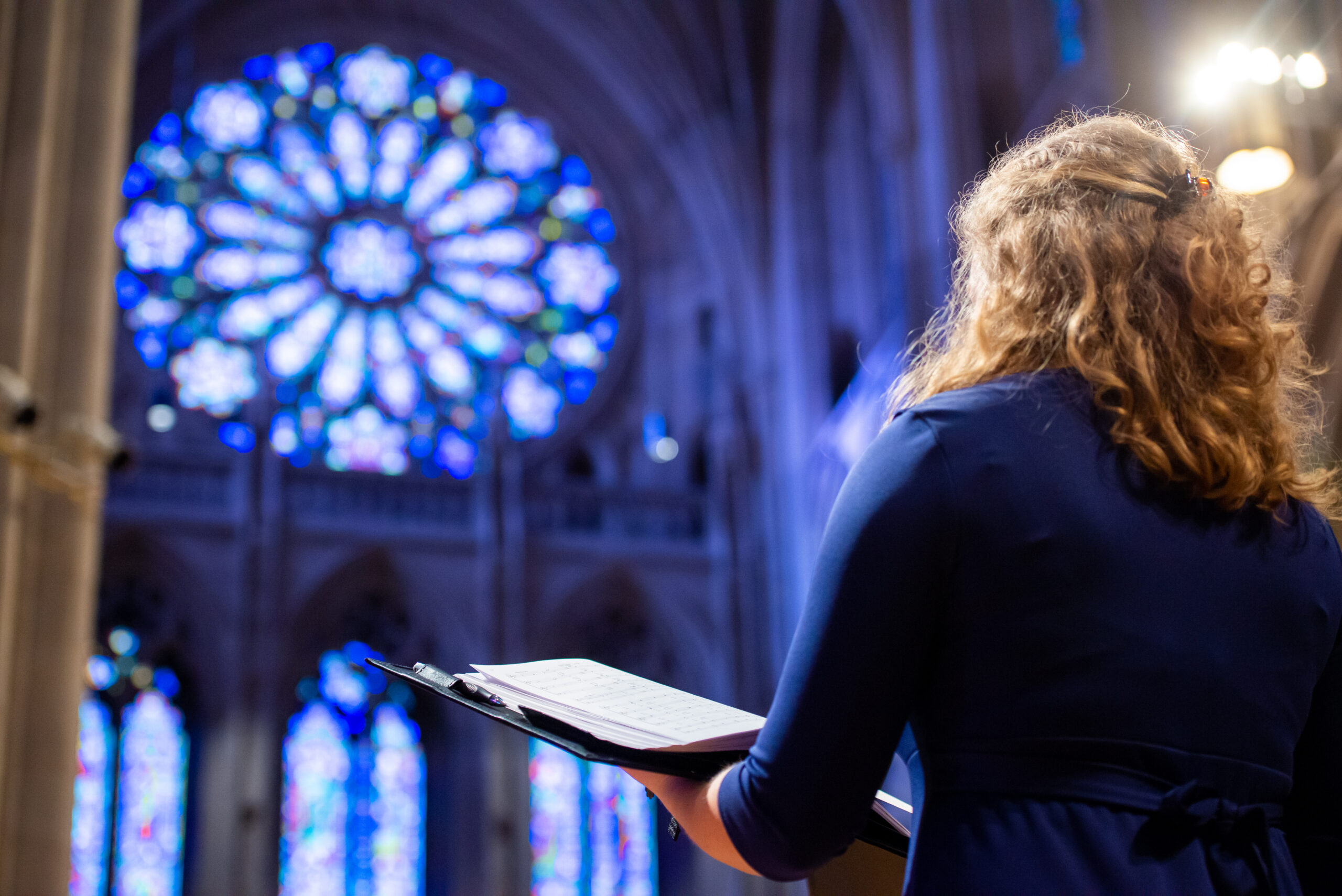
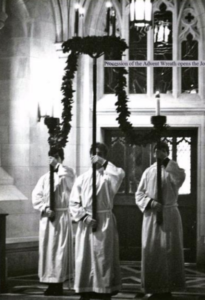
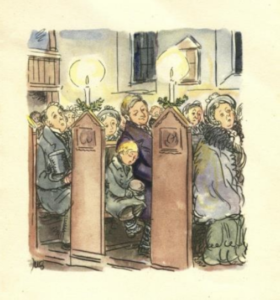
For generations of Washingtonians since 1976, the annual Joy of Christmas concerts at Washington National Cathedral mark the true beginning of the holiday season. The sense of expectation is palpable as the audience gathers, just before the pale light begins to fade from the afternoon sky and the last rays of a winter sun still warm the colors in the West Rose window. Slowly the lights recede: first the yellow, then the red, then the green. As the last vibrant hues of blue dim to an inky midnight, inside the Cathedral a holy silence descends. Then, candles light the darkness as the Advent Wreath and torches are borne in solemn procession by three Cathedral acolytes.

Christmas is here once again.

Earth Shall Ring With the Song Children Sing

Whether the solo treble singing Once in Royal David’s City at King’s College, Cambridge, or the mixed voices of a choir, it is the voices of children that feature in our most precious memories of Christmases past. The Washington Latin Public Charter School Choir under its Music Director Melissa VerCammen leads young voices in twentieth-century musical arrangements of new melodies and ancient texts spanning centuries.

The music chosen by Music Director Steven Fox for this year’s Joy of Christmas is a mixture of old and new, of ancient texts set to new tunes, old tunes adapted to new forms. All come from the infinite treasury of music composed and arranged by American, Austrian, English, French, Italian, and Spanish composers. The story they tell is an ancient one, heard anew.
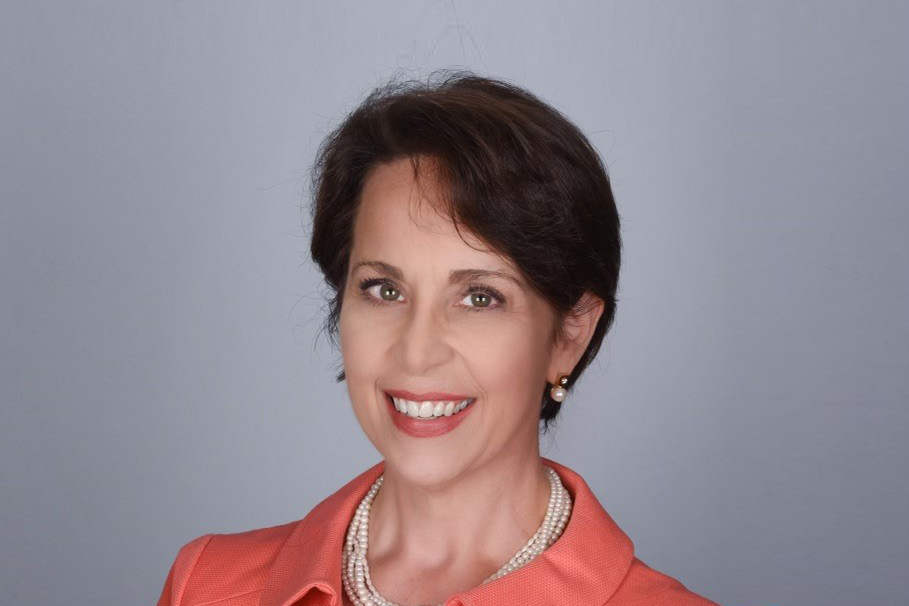

The Welsh poet Dylan Thomas evokes these “mystic chords of memory” in his idyllic reminiscence of Christmas as a young boy:

Always on Christmas night there was music . . .
Looking through my bedroom window, out into
the moonlight and the unending smoke-colored
snow, I could see the lights in the windows of all the
other houses on our hill and hear the music rising
from them up the long, steady falling night. I turned
the gas down, I got into bed.
I said some words to the close and holy darkness,
and then I slept.

—Dylan Thomas,
A Child’s Christmas in Wales, 1952

(c) 2024 Margaret Shannon

Cathedral Choral Society Selects Catherine Ort-Mabry as Interim Executive Director

October 21, 2024 

Washington, D.C. – Sarah Holmes, president of the Cathedral Choral Society (CCS) board of trustees, announced today that Catherine Ort-Mabry, CAE, a trusted executive and board advisor with extensive nonprofit communications and engagement expertise, will serve as CCS’s interim executive director beginning October 28th. 

Ms. Ort-Mabry is a compelling and effective leader with deep experience in helping large-scale nonprofit membership-based organizations define and deliver member value. She recently served as chief marketing and communications officer for the American Society for Microbiology (ASM), one of the largest professional societies dedicated to the life sciences. During her tenure at ASM, Ort-Mabry developed programs that exceeded goals in customer satisfaction, membership recruitment and retention, media exposure, and digital reach. Ms. Ort-Mabry is also Chief Executive Officer of C O M Solutions, a consulting firm that partners with purpose-driven organizations to meet their strategic priorities by activating their key stakeholders. In addition to her professional expertise, she has served as a member of the CCS soprano section for more than 25 years.  

Ort-Mabry will provide leadership and support to the CCS team while the organization begins a national search for its next executive director. Her efforts will focus on staff and operational leadership, board governance, and revenue enhancement through marketing and fundraising oversight. 

“The Cathedral Choral Society is strong and thriving thanks to the powerful combination of excellent leadership, exceptional artistic vision and exemplary performances, and I am honored to be able to be part of its continuing success,” Ort-Mabry said. “It’s a true delight to sing with this amazing group of artists, and now I’ll be able to contribute both on stage and behind the scenes.” 

Ms. Holmes stated, “I am delighted that Ms. Ort-Mabry has agreed to serve as our interim executive director. She brings a wealth of experience in non-profit work and has a decades-long devotion to the Cathedral Choral Society.” 

CCS’s music director Steven Fox noted, “Catherine’s experience and long history with CCS is a perfect fit for our goals and vision this season. It is a year full of collaborations, with the Baltimore Symphony Orchestra, Chanticleer, and a host of extraordinary soloists. We’re excited to welcome Catherine to CCS as we begin this special season. We know she will lead us to great heights.” 

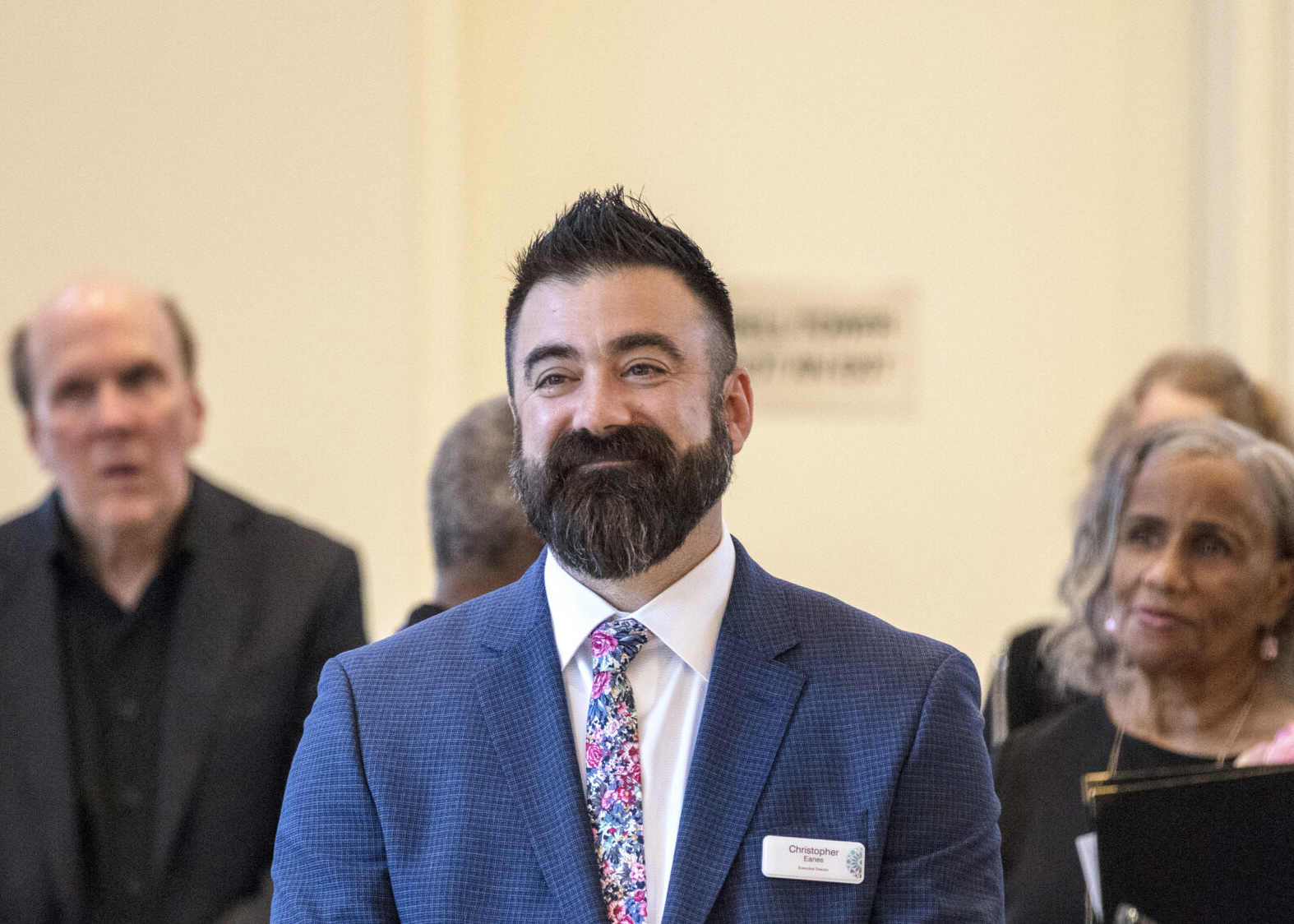
Ort-Mabry’s selection follows the departure of Christopher Eanes, CCS’s executive director since 2019, who announced his departure in September to assume the role of president and CEO of Chorus America, the national advocacy and membership organization for choruses throughout North America. The CCS board of trustees has formed a search committee to guide the recruitment and hiring of its next executive director. Additional information about the search process will be shared in the coming weeks. 

Before The Downbeat: Brahms’ Requiem

Before The Downbeat is a study guide by and for the Cathedral Choral Society in preparation for its concerts. Previously distributed in print form to singers only, we are thrilled to present this content to all our audiences in digital form.

Ein deutches Requiem is a watershed not only in Johannes Brahms’s development as a composer but also in the evolution of the Requiem as a musical form from its strictly Roman Catholic liturgical function to a musical vehicle by which to explore, through non-liturgical and even non-Biblical texts, the meaning of death, mourning and consolation.
First Washington Performances

At the turn of the twentieth century, choral music in the nation’s capital was presented primarily by church choirs. On March 16, 1905, the choir of the now-deconsecrated Trinity Episcopal church (First and C Streets, NW) gave the first known Washington performance of Brahms’s Ein deutsches Requiem, in English, under the direction of Oscar Franklin Comstock but with organ only. Five years later, The Choral Society of Washington, D.C. gave the next known complete performance in 1910.

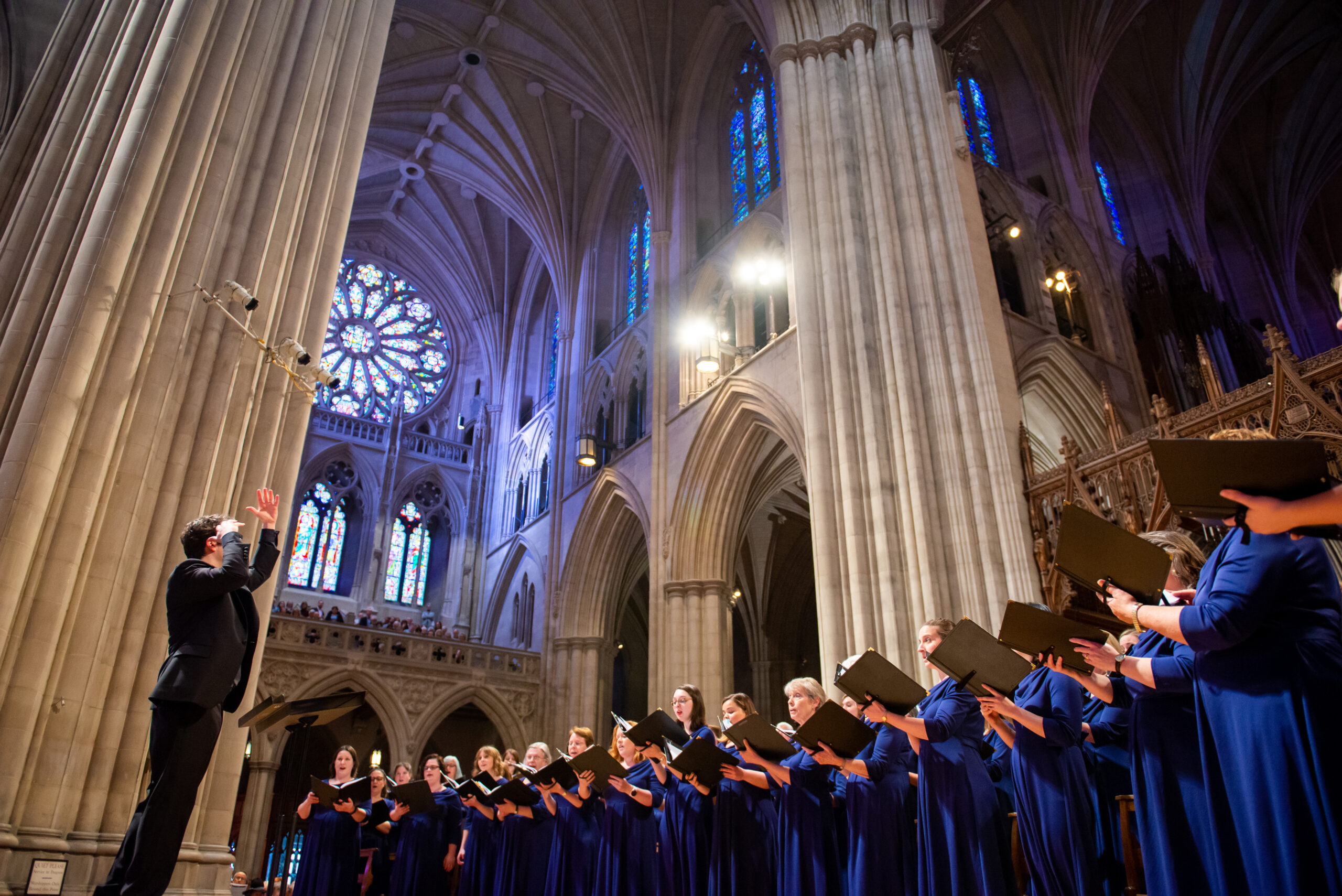
The Washington Choral Society, a precursor to the Cathedral Choral Society, gave the first complete performance with orchestra led by its founding director Louis Potter, again in English, on January 28, 1937, in this Cathedral to mark the first anniversary of the death of England’s King George V.

The Requiem, according to the Evening Star, drew “an audience beyond the capacity of the cathedral. Many left, not being able to find even standing room.” (At that time, the Cathedral’s grand space consisted only of the Great Choir, the chapels of St. John and St. Mary, the Crossing and the North Transept.) It was, the reviewer wrote, “an ambitious undertaking, but the chorus of nearly 100 voices accompanied by the organ, played by Robert G. Barrow [the Cathedral’s second organist and choirmaster], a good size orchestra [members of the nascent National Symphony Orchestra], acquitted itself in praiseworthy manner.”

The Cathedral Choral Society’s first performance took place in Constitution Hall on October 29, 1952, as part of the National Symphony Orchestra’s 20th Annual Founders Day Concert, marking the NSO’s third decade on the Washington musical scene. The Evening Star reviewed “a magnificent performance,” adding, “To Paul Callaway, director of the [Washington and Cathedral Choral] Societies, goes the highest praise for his accomplishment, and the ovation accorded him, when he was brought out to share the acclaim with the soloists and [NSO conductor] Dr. [Howard] Mitchell, was the audience’s encomium.”

“The voices of the singers are beautiful in ensemble, matched in purity of tone, in expressiveness and in security of pitch. The group produces pianissimos of unusual loveliness and reaches climaxes with rich tonal volume. Throughout, the nuances were superbly fashioned and the clarity of enunciation was a pleasure to hear . . . . Such singing as the Choral Societies did last night alone would have made the concert memorable.”

Dr. Callaway conducted the work again in 1959, 1980, and for the Society’s 25th season program that included the Washington premiere of Leonard Bernstein’s newly minted Chichester Psalms. In 1985, Richard Wayne Dirksen, Callaway’s successor, concluded his season as the Society’s interim music director with Ein deutsches Requiem. Dr. J. Reilly Lewis conducted three performances, most recently in 2013.

On October 20, 2024, Music Director Steven Fox is leading his first reading with the Cathedral Choral Society.

Guy’s Requiem

Guy’s Requiem
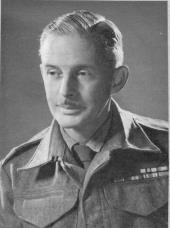
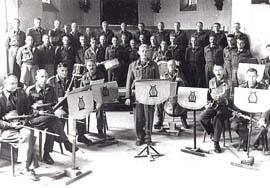
is the true story of Guy Nicolson (1895-1964), a decorated British veteran of World War I and Rhodes Scholar, who later became famed headmaster of Ridge School in Johannesburg. When World War II broke out, despite his age, he joined the staff of the South African 2nd Division as a captain. On June 21, 1942, Nicolson was captured in the disastrous fall of Tobruk during the North African Desert Campaign. He was held prisoner in Offizierlager XIIB, a German POW camp for British officers at Hadamar.

Nicolson used the intellectual and physical skills honed as a Rhodes Scholar to keep up the spirits of his fellow prisoners. Despite oppressive captivity and perilous escape attempts, he also set out to fulfill his lifelong dream to lead a symphony orchestra of prisoner-musicians in a full performance of Brahms’s Ein deutsches Requiem.
The Nazis exploited the orchestra for propaganda purposes, giving them equipment, music, and rehearsal facilities, as seen above. On March 8, 1945, Nicolson led the prisoners in a performance of the first, second, fourth, and fifth movements of the Brahms Requiem. The day before, U.S. forces secured the crucial Ludendorff Bridge over the Rhine near Remagen.

(c) 2024 Margaret Shannon
Reprinted with permissions from
Prelude, Vol. XXII, No. 1 (Fall 2024)

As Vibrant As Ever: Reflections on Choral Music Today

Some reflections from outgoing Executive Director Christopher Eanes; Dr. Eanes will leave the Cathedral Choral Society on October 25 to begin a new role as President & CEO of Chorus America. For more information, click here.

Choral singing is one of the most ancient and universal art forms. The simple act of singing together has played a role in communities throughout the world, all the way back to the beginning of recorded history. 

Perhaps because the art is so universal, we rarely stop to ask ourselves “why?” Why do we make art in this way, and what is the role of an organization like the Cathedral Choral Society in today’s complex world? 

When we come together to sing together, it is an act of community building: we need to trust our neighbor to breathe at the same time as us and to sing the correct pitch and vowel, as we each do our part in service to the musical score. By doing this, we foster personal connections and build empathy for those around us.  

Attending a live concert is itself an act of community; surrounding yourself with others, whether you know them or not, and engaging with the music is a shared experience that cannot be replicated on any other day or in any other place; it is unique to that moment.  

This is crucial in a time when we are living more solitary lives. The U.S. Surgeon General has declared loneliness and isolation a national epidemic; to address the issue, he recommends that we “Cultivate values of kindness, respect, service, and commitment to one another.” The best choruses embody these values, and I have a hunch it is one of the reasons that CCS singers stay in the chorus for so long. (It is not unusual for a CCS singer to have multiple decades of membership under their belt.) 

Every so often, a writer will publish an article lamenting what they feel is the decline of interest in and support for classical music in the United States. I wish, just once, that these writers would include choruses in their accounting. In the U.S., fifty-four million people sing in choruses. It is by far the most participatory art form in the country, and it is as vibrant and healthy as ever. At CCS, we have seen record numbers of folks turning out to audition, and our audience numbers are back to pre-pandemic levels (and then some). 

Why is this? In this digital age, I think there is something compelling about the fact that choral singing is an entirely analog art form. There’s just nothing like being in the room when a chord locks, perfectly in tune, and the individual notes add up to something far greater, much the way that people are stronger together than we are individually. There comes a resonance within us, connecting us with our ancestors and our neighbors and awakening in us the very essence of what it means to be human. 


Cathedral Choral Society Announces Leadership Transition

September 24, 2024

Washington, D.C. – Sarah Holmes, President of the Board of Trustees of the Cathedral Choral Society, announced the forthcoming departure of the chorus’ Executive Director, Dr. Christopher Eanes. Eanes will depart following the opening concert of the season, Brahms’ Requiem. On November 1st, he will become President & CEO of Chorus America, the national advocacy and membership organization for choruses throughout North America.

Ms. Holmes stated, “Chris Eanes has led the Cathedral Choral Society with a keen strategic vision, dedication to excellence, and a deep passion for collaboration across the arts. We will miss his leadership greatly, yet we celebrate his many contributions to our organization, and the opportunities he now faces.”

Dr. Eanes came to CCS in 2019 and quickly reoriented the organization to navigate the COVID-19 pandemic. In his time at CCS, Eanes oversaw the creation and implementation of a strategic plan focused heavily on access, diversity, equity, and inclusion, as well as a re-branding of the organization and substantial investment in expanded programming and collaboration. During his tenure, working alongside Music Director Steven Fox, the organization was nominated for GRAMMY Award, and offered collaborations with the Baltimore Symphony Orchestra, Atlanta Ballet, Pershing’s Own U.S. Army Blues, the Washington Bach Consort, and more. Together, Eanes & Fox launched the multi-year I, Too, Sing America initiative in partnership with the Heritage Signature Chorale. Under Eanes’ leadership, ticket sales have consistently outpaced national post-COVID trends.

Steven Fox, Music Director of the Cathedral Choral Society, noted the following: “At the same time as we are sad to see Chris moving on from Cathedral Choral Society, we are also thrilled for him and for this extraordinary new chapter in his career. Chris is a natural leader and has been an ideal Executive Director for CCS. He has built a first rate staff and board that will continue to lead the organization to new heights and will always be a part of his legacy. Personally, I am grateful for the partnership Chris and I had over five seasons together. We hit it off right away, and I only felt our working relationship, and friendship, strengthen throughout these years. I learned a tremendous amount from him and have grown from our collaboration.”

The Cathedral Choral Society has assembled a transition team and will name an interim Executive Director in the coming weeks.

Why Choral Music Makes the Holidays Meaningful

Choral Music is such an important part of the holiday season. What is it about singing together that makes the holidays mean so much more? For the answer, we went to Liza W. Beth, who is the vice president of communications and membership of Chorus America.


During the holidays, no matter how you celebrate, music is a central part of the season. And choral music and the holidays are particularly intertwined.

Why exactly is that? Tradition plays a role, of course. But, above all, I think we turn to choral music this time of year because the rich and beautiful sound of voices joined in song evokes the sense of togetherness that we yearn for during the holidays. When we want to feel close to our loved ones and our fellow humans, choral music offers us a means to celebrate, reflect, and connect.

The connection between choral music and being part of something larger than ourselves is something many of us instinctively feel. It’s also supported by research, including Chorus America’s own studies. The Intrinsic Impact Audience Project shows that audiences are deeply affected by choral performances, and that the experience is especially powerful when they feel like they have connected with others through the music. That could mean feeling closer to the family and friends that accompanied them to the performance, or it could mean learning about a different culture or tradition through intentional programming.

Chorus America’s series of Chorus Impact Studies also shine a light on the benefits that choral music and singing together bring to individuals and communities. Singing together connects people, builds stronger relationships, and fosters a sense of belonging. And the 54 million Americans who sing in choruses volunteer, donate, and give back to their communities in a big way. As creators of these shared experiences for audiences and singers alike, organizations like Cathedral Choral Society are a powerful force for good.

So at your next choral performance this holiday season, whether you find yourself in the audience or on the stage, I hope you’ll take an extra moment to pause. Think of the many people who have gathered, in one particular place and at one particular moment, to be part of a musical and artistic experience that nourishes belonging, and connection, and hope.

Those powerful feelings ripple outward from the concert hall or cathedral, throughout your community, and beyond – just as the joy and togetherness of the holiday season touches our lives all year long.

Liza W. Beth is the vice president of communications and membership at Chorus America, the advocacy, research, and professional development organization that advances the choral field. Learn more at chorusamerica.org.