Mexican Pink: How a Color Transports Us into the World of Two Cathedrals

In the October 2023 issue of our quarterly newsletter, Creative Media & Marketing Manager Erin Haar highlights how a shade of pink inspired many aspects of CCS’ upcoming concert.

Weeks ago, I sat down for a Tuesday CCS staff meeting ready to brainstorm with my coworkers about our upcoming concert. Tickets for our season had just officially launched, and I was ready to plug back into my concert marketing routine. 

That’s exactly what I expected – routine – when I brought up our most immediate project, October’s Two Cathedrals concert, celebrating baroque music from the Metropolitan Cathedral in Mexico City. I had a checklist in my head that I was ready to fly through for our concert booklet: a welcome letter, text and translations, program notes, advertisements… and I asked for suggestions with a pen in my hand and my eyes in my notebook. 

“What about including Mexican Pink?” 

I looked up. Our Donor & Patron Manager, Gabriela Calderon, glanced inquisitively around the room at the rest of us shaking our heads. We had not heard of Mexican Pink, but we were certainly now intrigued. 

Gabriela began to describe Mexican Pink to us: a shade of pink, slightly warmer than fuchsia or magenta, made famous by artist Ramón Valdiosera as a symbol of the vivacity of Mexican culture. She showed us examples of Mexican Pink in architecture, textiles, and more. And she explained how the color represents the lively spirit woven into multitudes of aspects of Mexican heritage.  

Not only was Mexican Pink an amazing design inspiration for our booklets, but it was also a reminder of why we’re starting our 2023-24 season with this particular concert. Centuries ago in modern-day Mexico, artistic and religious influences brought by Spanish conquistadors collided with the musical traditions of indigenous populations. This created a vivacious and unique musical style that we know today as Mexican baroque, and it is exactly this vivacity that we plan to celebrate and honor through our October 22nd performance. 

Like Mexican Pink, or Rosa Mexicano, we’re aiming to highlight aspects of this musical culture that we don’t normally examine in this concert. And we invite you to join us! 

Wear a little piece of Mexican pink ‘flare’ (or a lot) and bring your own vivacity and spirit to Two Cathedrals. We could not be more excited to celebrate this music with you. 

– Erin Haar, Creative Media & Marketing Manager

A Brief History of Sergei Rachmaninoff

Simon Morrison, Professor of Music at Princeton University, highlights the stories behind Sergei Rachmaninoff’s lesser known works and his greatest hits in our monthly newsletter.
Sergei Rachmaninoff composed some of the greatest hits of the 20th century by reaching back to the 19th century for inspiration. Fitting him in the history books has proved challenging: Was he Romantic? Was he modern? Was he modern and hopelessly nostalgic? Or even anti-modern and (as Richard Taruskin put it) “loving it”? There are other questions related to his sound. What happened to him in the United States after the Russian Revolution? He lived in Moscow and in Europe and in the US from 1917 until his death in Beverly Hills in 1943.  During his last twenty-five years he composed relatively little – just six of his 46 major works – while continuing to concertize.

He liked the high life of the 20s and 30s and proved himself a savvy businessman, notably in numerous successful publishing ventures. Rachmaninoff’s music enriched Orthodox religious expression, rethought nationalism, and addressed trauma, exile, and estrangement. He had deep and long-lasting obsessions: chant, Dante, Edgar Allen Poe, bells. He knew he had a gift for melody, and understood that gift could at times be a curse, since what he considered to be his most significant works were overshadowed by the hits. That he emerged from a Russian musical context that championed accessibility, beauty, heart-on-sleeve erotic-exotic lyricism, and traditional forms made him immortal.

His most famous piece is his Prelude in C-sharp minor. He premiered it at the Moscow Electrical Exhibition of September 1892, his public debut as a pianist. It became instantly popular, and for the rest of his international life Rachmaninoff was asked to play it, all the while refuting that it was somehow about his homeland. “I wrote it – but it is not a ‘bells of Moscow thing.’ I never had any bells in mind while writing it, I assure you.” “I am very sorry,” he told a reporter in Minneapolis in 1921.

Still, the hits kept coming and he kept playing them, all to maintain his lifestyle. The hits also kept coming because he wanted to connect with listeners, eschewing the dissonance, experiment, formalism, and neurosis of his Modernist peers.

Sometimes he failed. The 1897 premiere of his First Symphony under the baton of a tipsy conductor was a fiasco that, according to legend, sank Rachmaninoff into depression and a creative paralysis that only a hypnotist could cure. It’s a great story but it isn’t true. Rachmaninoff didn’t stop composing, and there happened to be personal reasons for his funk. Sessions with the hypnotist, Nikolai Dahl, seem to have been less therapeutic than social. He and Rachmaninoff chit-chatted.

He recovered with his Second Piano Concerto of 1901. Most concert-goers know this piece owing to its permanent presence on the international piano competition circuit. It’s so technically dazzling and melodically affecting as to leave listeners begging for more (or for less), with the knuckle-busting finale often ending with the pianist throwing themselves backwards in ecstatic relief (Lang Lang does this bit of theater the best).

Eric Carmen’s pop classic “All By Myself” borrows from the Second Piano Concerto, and great theme of the adagio of Rachmaninoff’s Second Symphony became part of Carmen’s (and Frank Sinatra’s) single “Never Gonna Fall in Love Again.” The melody achieves its magic in the symphony thanks to the chords underneath: alternating major and minor seventh sonorities that build to a climax that suddenly goes from loud to soft. It’s a heavenly effect lost in the popular versions – and lost in much 20th-century modern music. Rachmaninoff believed music directly influences a person’s mind, body, and spirit, but only after first passing through the heart.

His most beloved vocal piece is setting of the Vespers, or “All Night Vigil” as it is known in the Russian Orthodox Context. Among the most beautiful of all works for unaccompanied chorus, it turns away from the horrors of the world to gaze into eternity, and its sincerity seems all the more remarkable when we remember that Rachmaninoff wrote it long after he had ceased to be a churchgoer. He wanted the section called “Now Let Thy Servant Depart” to be performed at his own funeral. After another gorgeous melody, the music quietly quits the world at the end.

An Interview with CCS Singer and BSO Violinist Anne Donaldson

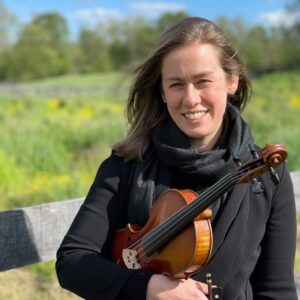
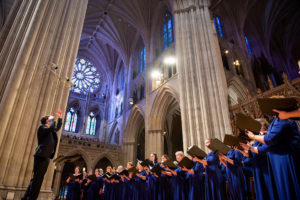
A Birmingham, Alabama native, Anne Donaldson has been singing and playing violin ever since she was little. Currently living in Washington, D.C., Donaldson has been singing with CCS in the Alto 1 section since 2020!
Can you tell us a little bit about your musical background and your involvement with both CCS and the BSO?

Anne Donaldson: I’ve been in the DC area for about 8 years. I sang in choirs a lot when I was a kid, so during the pandemic I decided that I wanted to audition for CCS. So that’s when I started singing with the Cathedral Choral Society, and I loved it! This year, I’m doing a one-year contract with the Baltimore Symphony Orchestra. I started playing the violin in a school music program, and I was 8 at the time. My parents are both orchestra musicians, so I’ve been around classical music my whole life.

What is the feeling you get or the experience you have when you perform with an orchestra as a singer in CCS?

AD: I just think the orchestra adds so much dimension to our performances. The experience of having that much sound in the room is really cool. I’ve actually played with an orchestra with CCS before, when we did I Have Something to Say last season… I remember telling people in the orchestra, “This is my choir that I’m in.” It made me feel proud that I was in the choir!

What are you looking forward to about performing with CCS in Washington National Cathedral again on the orchestra side?

AD: I think it’ll be interesting to perform with the Baltimore Symphony Orchestra. And playing at the Cathedral can be super weird sometimes. The amount of reverberation that there is is kind of wild. I remember during the I Have Something to Say concert we were playing a piece by Fanny Mendelssohn, and it sounded like there was a musical echo, but it was just the literal echo from the back of the church.

I think it’s a challenge to play in there, but I also think it’ll be cool because you don’t usually have people that cross over, who are in the orchestra and who know people in the choir. It will be nice to see people who I know from the choir, so I’m looking forward to the social experience of this concert! And I’m looking forward to playing Rachmaninoff, of course.

CCS is part of WETA Arts’ Songs of the Season!

The Cathedral Choral Society is honored to be included in this year’s Songs of the Season presented by WETA Arts! This is the third year of Songs of the Season, a spirited holiday music special featuring choral groups from all around the D.C. area.

Conceived in 2020 to celebrate choral music during the pandemic, Songs of the Season has become a WETA holiday tradition. This year’s special showcases 15 talented choral groups from D.C., Maryland, and Virginia.

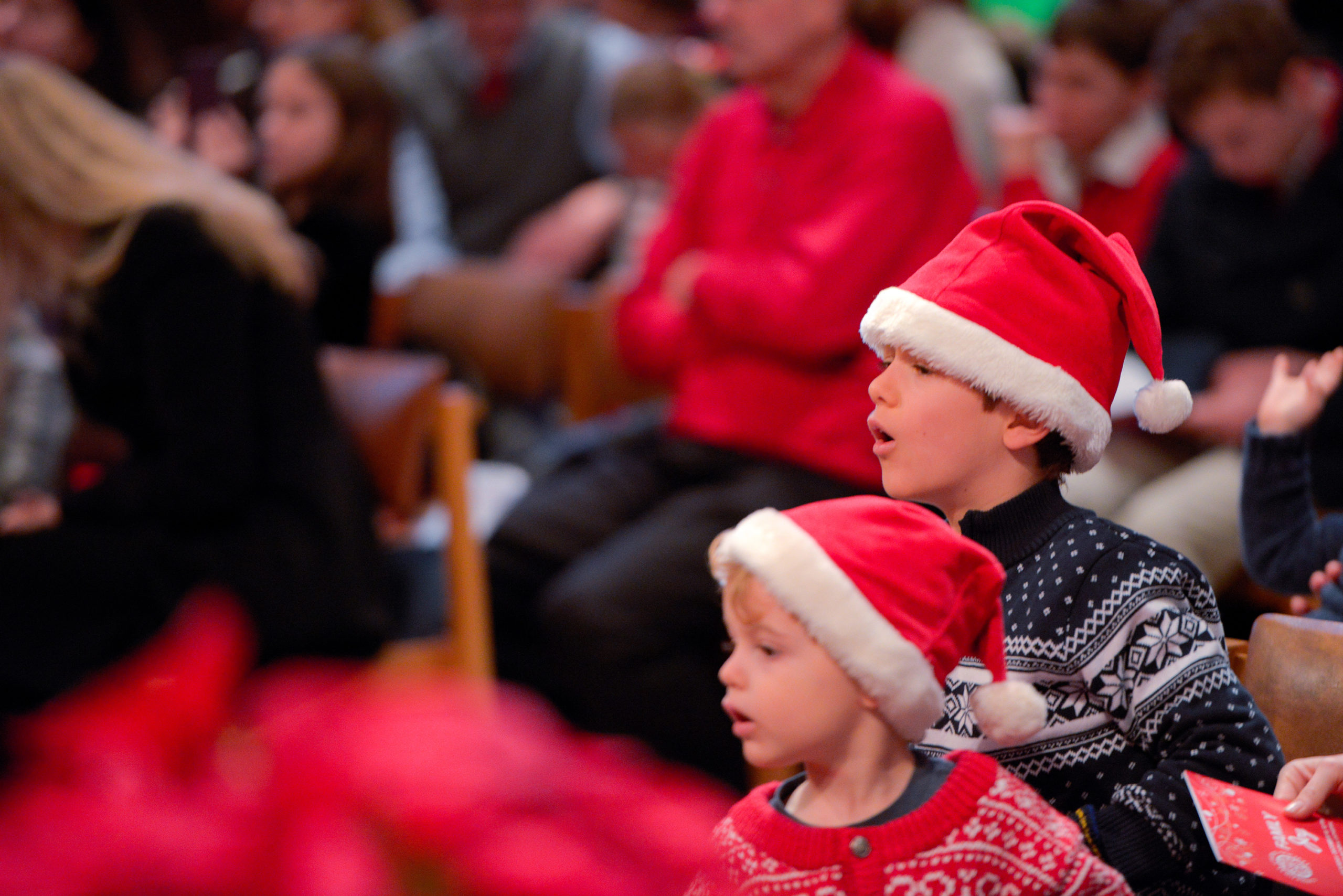
The special will premiere on December 19 at 9 p.m. on WETA PBS and 8 p.m. on WETA Metro. Additional airings are scheduled as well at the following times!

  • 12/20 at 3 p.m. on WETA PBS
  • 12/22 at 9 p.m. on WETA Metro
  • 12/24 at 7 p.m. on WETA PBS and WETA Metro
  • 12/25 at 5 p.m. on WETA PBS and WETA Metro

Songs of the Season will also be available to stream for free on the PBS App. Thanks you so much for WETA Arts for including us in the wonderful holiday program!

A Kaleidoscope of Light: The Launch of Our Annual Fund Campaign

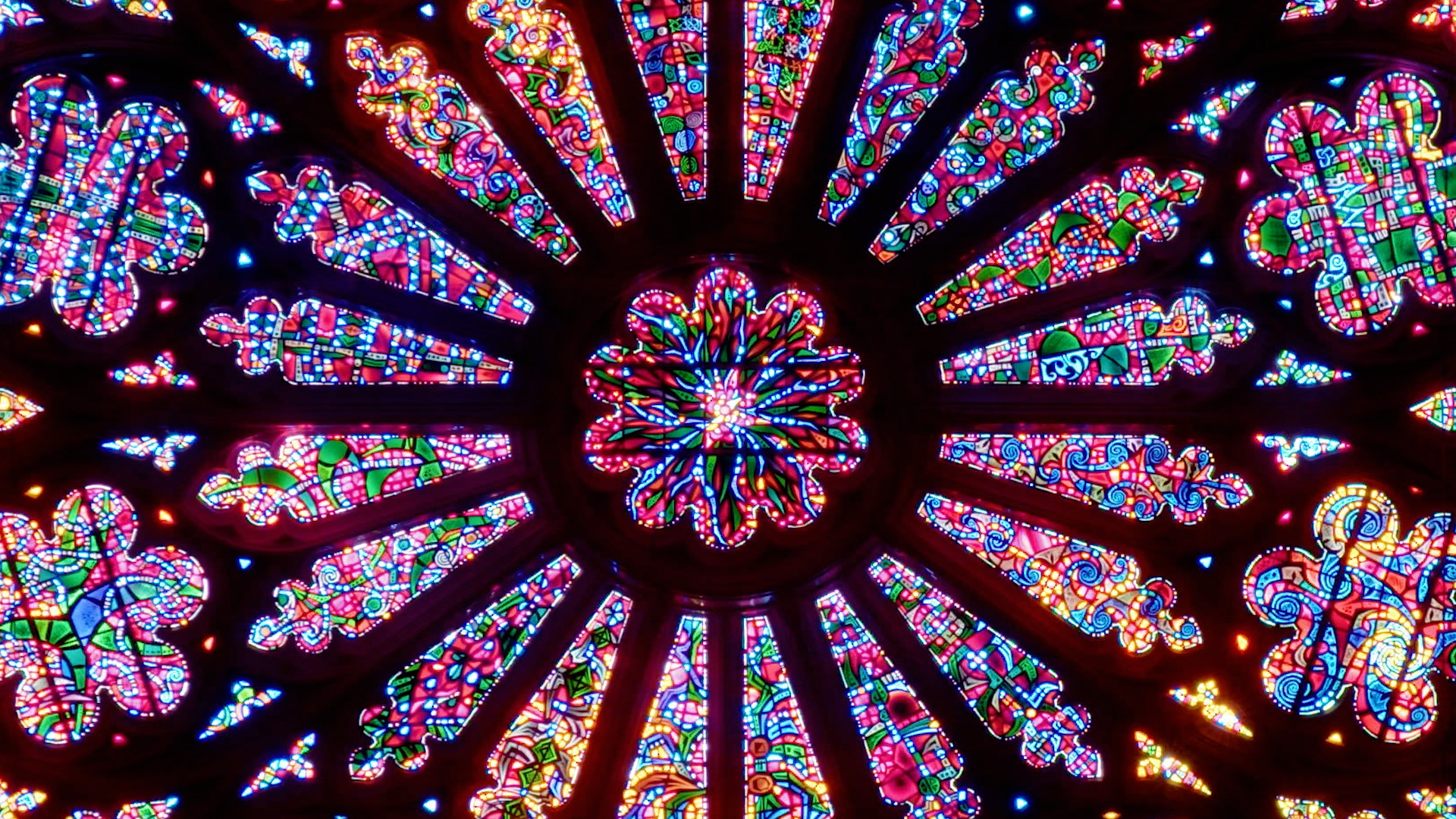
At the west end of Washington National Cathedral is a 26-foot-tall rose window made up of more than 10,000 small and large pieces of glass, each individually colored. Together, these pieces create a stunning image that casts its kaleidoscope of light on the Cathedral’s walls. This light is ever-changing, with new perspectives offered each moment of the day.

You are part of the light that shines at the Cathedral Choral Society. Your contribution adds to our color palette and provides us with the resources we need to create transcendent musical moments in a space of beauty and community.

I am writing to ask you for your support of our Annual Fund campaign today. We have set an ambitious goal: we aim to raise $320,000 by June 30, 2023, and it is only possible with your support. Your gift enables us to collaborate with world-class guest artists like the Atlanta Ballet and the Baltimore Symphony Orchestra and to continue important initiatives like our multi-year I, Too, Sing America program with the Heritage Signature Chorale.

Sometimes it is the smallest piece of glass that sparkles the most. Whether large or small, each and every donation provides us the inspiration we need to keep creating, to keep singing with voices and hearts full.

Thank you for your support and for being a member of our community.

With gratitude,

Christopher Eanes
Executive Director

How To: Purchase $10 Children’s Tickets for Joy of Christmas

The whole family is invited to our Joy of Christmas concerts!

From free coloring books at our merch table to the Christmas decor all around the Cathedral, we’ve got everyone covered at our holiday performances. We’ve even got a family discount –– children 12 and under can sit anywhere in the Cathedral for $10!

Here’s how to access this discount:

  • Click the “Get Tickets” link below, then choose which Joy of Christmas concert you’d like to attend.
  • Select where you’d like to sit and how many tickets you’re purchasing.
  • Click the green “Choose Your Seats” button.
  • Then, in the price selection box in the upper right hand corner select “Joy of Christmas 12 and Under $10.”
  • Select your tickets and add them to your cart!

If you’d like to continue shopping to purchase your adult tickets at this time, we recommend writing down the section, row, and seat number of the children’s ticket you just added to your cart. That way, when you click the “Continue Shopping” button, you can find seats in the same spot of the Cathedral.

If you have any questions, please reach out to the Cathedral box office at tickets@cathedral.org or by phone at (202) 537-2228. We can’t wait to see everyone there!

Why Choirs Are Growing Now More Than Ever

In our November 2022 issue of our monthly newsletter, we discuss the trajectory of choral groups throughout the pandemic and beyond.

The pandemic hit choirs and musical groups hard. Not only were in-person audiences completely absent for over a year, but in-person rehearsals were cancelled too. Missing out on these weekly meetings struck at the heart of why so many people in America join choral groups — friendship, personal enjoyment, and community. 

According to Chorus America’s most recent Chorus Impact Study, 17% of Americans were singing in choirs as of 2019. Choral singing offers a variety of benefits, including improved social skills, increased mindfulness and resilience, and stronger connections within communities. 
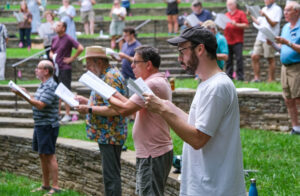
With these benefits all but decimated, the return to singing in 2021 couldn’t come soon enough. However, these first gatherings weren’t quite the same. While masks and social distancing kept many singers safe, they also meant “reconsidering what togetherness means,” according to an August 2021 article from the Chicago Tribune on the topic. Reexamining rehearsal spaces, repertoire, and even the logistics of virtual performances eventually gave way to an increased emphasis on the feelings of fellowship and connection. 

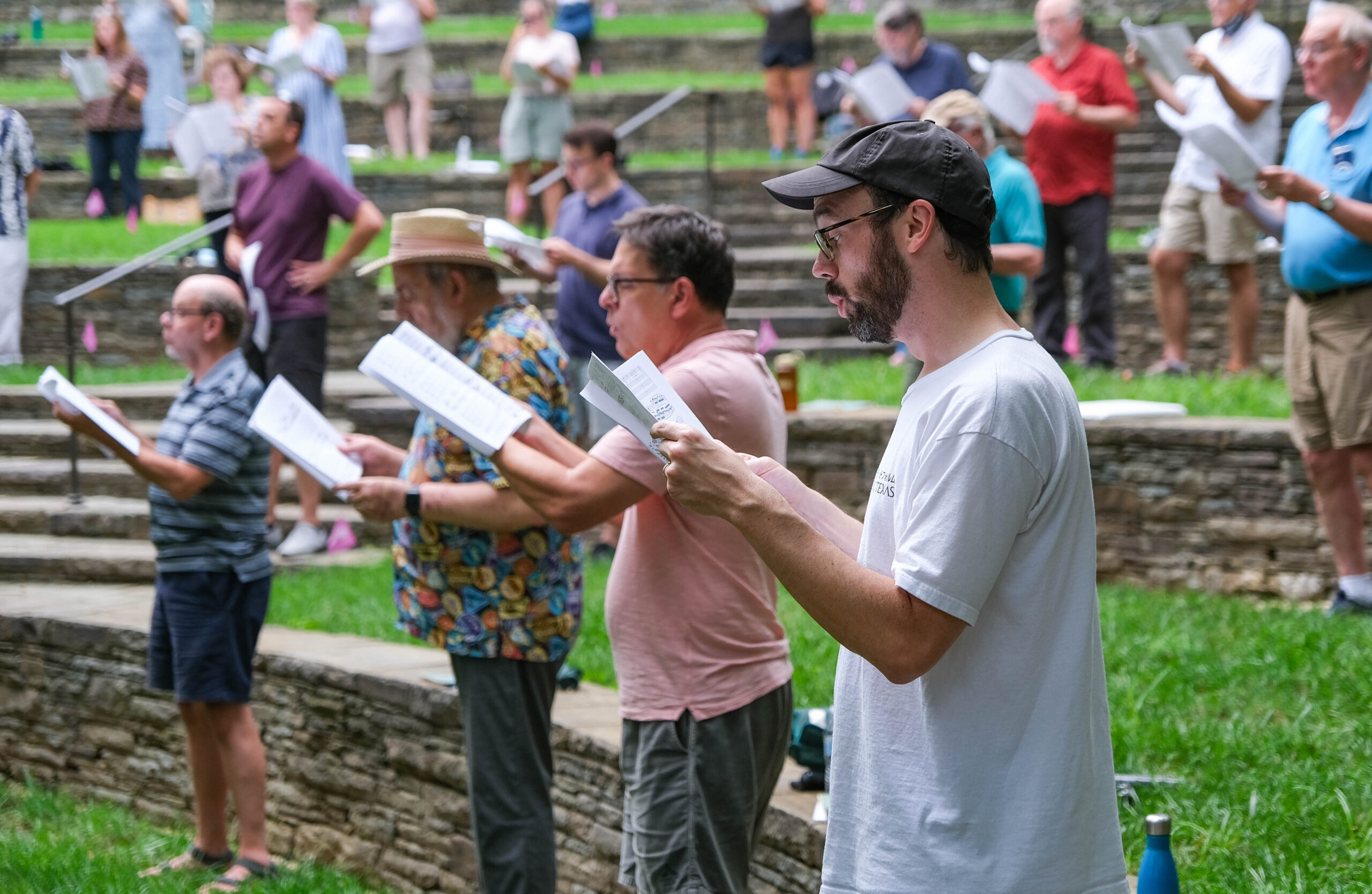
At CCS, we’ve experienced similar sentiments — new friends and long-time singers joined us with great enthusiasm for our SummerSings series and the start of rehearsals in 2021, but precautions like mask-wearing, providing proof of vaccination, and social distancing are still being practiced today and likely will be for the foreseeable future. 
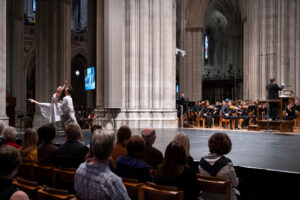
With all the obstacles we have overcome, where are we now? In 2022, we’ve seen an abundance of interest in reconnecting with choral groups or joining one for the first time. At CCS, we had a record number of new singers join us for our first performance of the season, and more are on their way. 

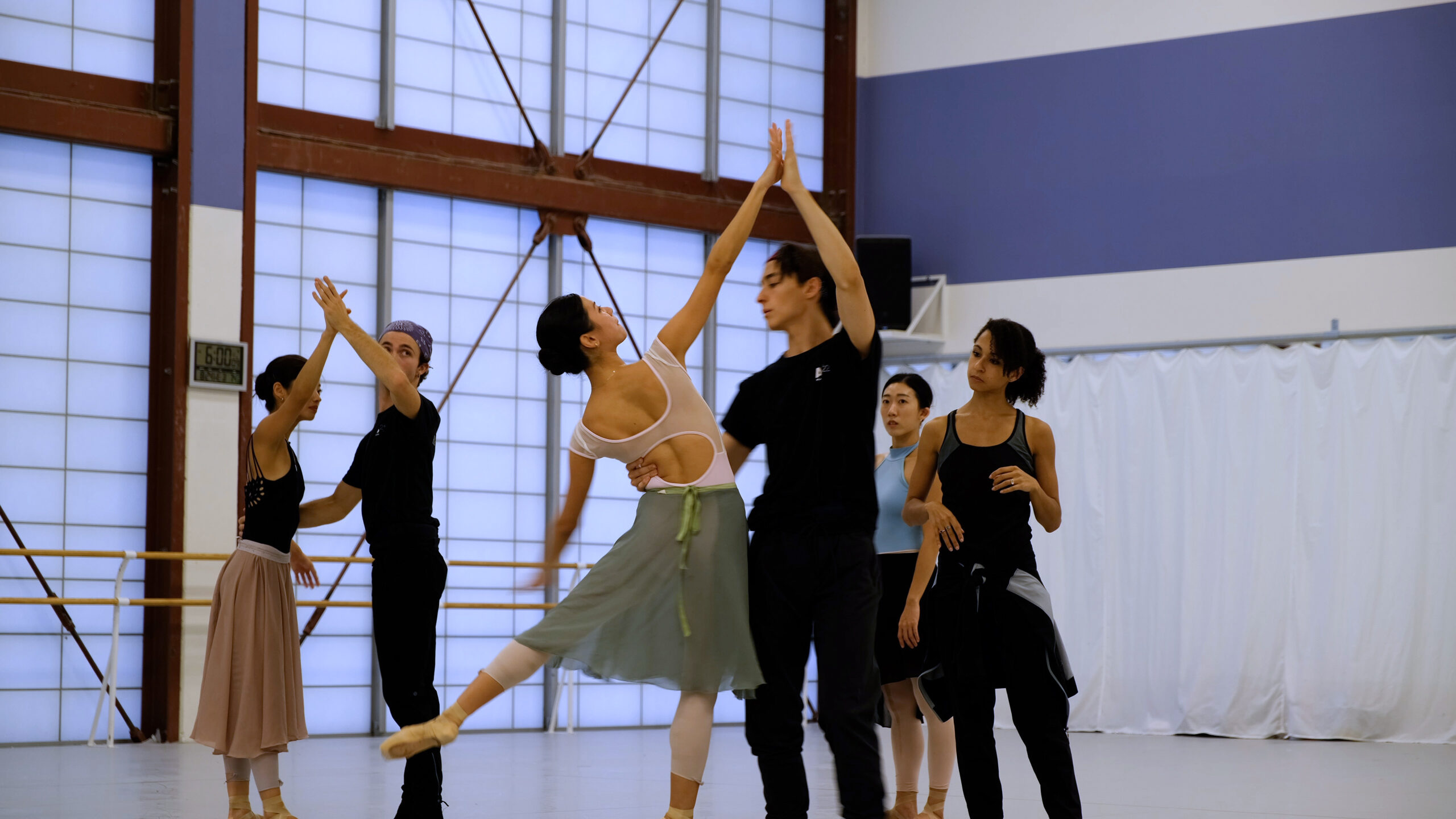
Nationwide, however, audiences have been slower to return. While understandable, it is a shame, because many arts organizations are releasing a burst of pent-up creative energy that is meaningful, innovative, and immersive. CCS’s recent performance of Berlioz’s Roméo et Juliette  had Capulet and Montague motifs displayed throughout the Cathedral alongside stunning new choreography performed by Atlanta Ballet. The immersive experience is becoming the new normal, and we are ready to embrace it.   
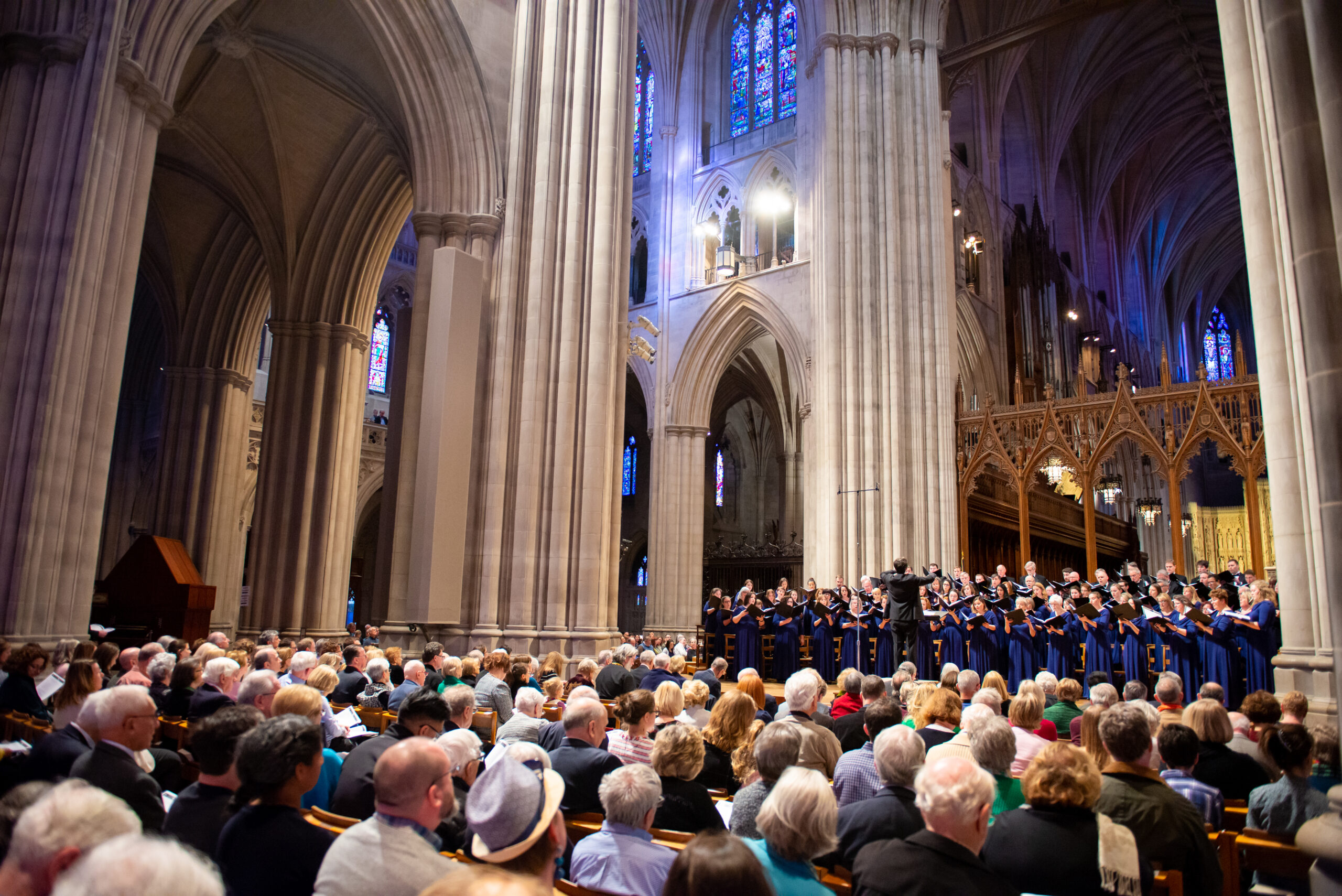
 When we think about where our chorus is today, we can tell that returning to in-person events has only strengthened the passion that we feel towards music. All the benefits we felt in 2019 — enthusiasm, mindfulness, artistic fulfillment, friendship — have only grown. And that’s certainly something to be thankful for. 

An Interview with the Romeo & Juliet Dancers

As rehearsals at Atlanta Ballet continue for our upcoming performance, dancers Emily Carrico and Erik Kim sit down with CCS to talk about their creative approach to telling this classic love story. Keep reading for these dancers’ insights on our most immersive concert experience to date!

What have rehearsals been like so far with Claudia Schreier and with your other fellow dancers?

Emily Carrico: Being a part of the creative process for Claudia Schreier’s new work for the Cathedral Choral Society has been an invaluable experience. She has pushed us all to explore movement in new and challenging ways, while also embodying the iconic roles of Romeo and Juliet.

Erik Kim: It has been an interesting process. Rehearsals have been tedious at times due to the very nature of the narrative we are presenting; Claudia gives intricate steps and thoughtful tips on its execution. But at the end of the day, dancing the new choreography that we just created that day for the first time is one of the most rewarding feelings.

How do you embody the story of Romeo & Juliet in your dancing?

Emily Carrico: I have the privilege of dancing Juliet in the balcony scene. I try to bring innocence and joy to each step, but for this particular pas de deux I aim to show an evolution. The pas begins with hesitation and excitement and concludes with total abandonment as she knows she has truly found the love of her life.

What is a part of this new choreography that you find interesting or that audiences should look out for in the performance?

Erik Kim: Look out for the ballroom scene –– throughout this intricate scene, Romeo and Juliet’s attraction builds and builds in this more public setting. First, it begins with subtle glances, then, physical reaching –– a yearning. Finally, after minutes of court dancing, Romeo abandons his partner and rushes to Juliet, grasping her in a slow and intimate spin.

When you think about performing this piece in a space like Washington National Cathedral, what excites you the most?

Emily Carrico: I am thrilled to be performing inside such a beautiful and spiritual place. For me, I think it will bring the character of Juliet to another level!

From Our Monthly Newsletter: The Demise of Classical Music?

Our Executive Director Chris Eanes discusses the increasingly immersive future of choral music and our upcoming season.


It’s difficult to say why exactly, but the 2022-2023 concert season feels like our first post-pandemic season. That’s not to say that the pandemic is over, or that we’re finished having to make decisions that affect folks’ health and safety. But there seems to be a tacit acknowledgment that COVID-19 is an ongoing reality, and we must find ways to return to making music that are equal to – or better than – how we were doing it before.  So, where our 2021-2022 season was a year of cautious rebuilding, this season is a coming-out party.

In a New York Times article on August 21, the authors Michael Paulson and Javier C. Hernández noted, “…some fear that the virus is accelerating long-term trends that have troubled arts organizations for years, including softer ticket sales for many classical music events, the decline of the subscription model for selling tickets at many performing arts organizations, and the increasing tendency among consumers to purchase tickets at the last minute.”

Does this track with what we’re seeing at the Cathedral Choral Society?

At CCS, we have seen an unprecedented number of people – many of them younger than 35 – coming to audition for the chorus. Philanthropic support remains strong at the individual, foundation and government levels.

I won’t avoid the question of “softer” ticket sales. Indeed, like our peer organizations, we’ve seen fewer tickets sold than before the pandemic. That’s to be expected.

But when you include our digital programming and streaming, last year we reached people in all 50 states – up from 38 before the pandemic – and in 20 different countries – a boost from just 9 in prior years. Simply put, more people experienced our art this past year than in any other year in our eight-decade history. And, not by a small amount: 88% more people engaged with CCS in the 2021-2022 season than in our next-best season (2016-2017).

When the 2009 recession wreaked havoc among arts organizations in the United States, a reckoning among arts leaders led to a decade of intensely creative programming, both in the art itself and in the way it is offered to audiences. Many of the companies that played it safe are no longer around.

Relative to 2009, we’re in a much more positive position. Not only have we had a couple of years to think about our art and how we want to engage people in it, but many arts organizations – CCS included – have been able to continue on solid financial footing, thanks to government support and the loyalty of our donors.

So, I offer this: People are a bit slower to come back, and they should be. Folks have spent two and a half years reevaluating what’s important. The art that we consume and the ways in which we consume it have changed dramatically. To think that we should simply turn the lights back on and continue with our old business model is not only optimistic, it is foolhardy.

At the Cathedral Choral Society, this means we are going big this year. For us, the concert is no longer a 90-minute event, it is a holistic experience that begins with the ticket purchase. It will be increasingly immersive (will you be a Capulet or a Montague at our Roméo et Juliette performance?), increasingly creative, and increasingly responsive.

We should stop talking about the death of the subscription model and, instead, talk about the possibilities that lie ahead. In the coming years, pent-up creative energy will burst forth. If it’s offered to our communities in ways that are accessible and relevant, we’re sure to experience a time of extraordinary excitement and growth.

Also, it’s ok to buy your tickets the week before the concert. I do.